Jun 24, 2026
Learn how to use WhatsApp Business API to expand your brand globally in 2026. Strategies for multilingual messaging, localisation, and international growth.

The world is
already on WhatsApp. Over 3 billion people across 180+ countries open WhatsApp
every single day — to talk to friends, receive updates from brands they love,
and make purchasing decisions. For businesses with global ambitions, this is
not just an opportunity. It is the most powerful direct-access communication
channel ever made available to marketers.
The WhatsApp
Business API makes it possible to reach customers in São Paulo, Mumbai, Dubai,
London, and Lagos — all from a single platform, in their local language, at the
exact moment they are ready to engage. But going global with WhatsApp requires
more than just setting up an account. It requires a strategic approach to
localisation, compliance, automation, and market-specific messaging that
resonates culturally as well as commercially.
This guide is
your complete playbook for building a global brand presence through the
WhatsApp Business API in 2026 — from initial setup to market-by-market
execution.
|
3 Billion+ WhatsApp Monthly Active Users Globally |
180+ Countries Where WhatsApp Is #1 App |
500M+ WhatsApp Users in India Alone |
|
98% Average WhatsApp Message Open Rate |
60+ Languages Supported by WhatsApp API |
40% Higher Conversions With Localised
Messaging |
WhatsApp's Dominance Across 180+ Countries
No other
communication platform comes close to WhatsApp's global footprint. WhatsApp is
the number one messaging app across South Asia, Latin America, the Middle East,
sub-Saharan Africa, and most of Western and Southern Europe. In India, it is
the primary way hundreds of millions of people communicate daily. In Brazil,
WhatsApp has effectively replaced SMS. In the UAE and Saudi Arabia, it is the
dominant channel for business enquiries.
This geographic
dominance means that for most international businesses, WhatsApp is not just
one channel among many — it is the channel. Building your global communication
strategy around WhatsApp means building it around where your customers already
are, in markets that matter most to global growth.
Why Global Brands Are Shifting to WhatsApp-First Strategies
Global brands
are shifting to WhatsApp-first strategies for three compelling reasons. First,
the open rate — WhatsApp messages are opened 98% of the time, compared to
roughly 20% for email. Second, the response rate — customers reply to WhatsApp
messages in minutes, not days, creating real-time sales and support
conversations at global scale. Third, the trust factor — WhatsApp feels
personal and private to users, which translates into higher engagement, lower
opt-out rates, and stronger customer relationships than any broadcast channel
can achieve.
The Business Case for Going Global with WhatsApp
The financial case is equally compelling. Businesses using localised WhatsApp messaging report up to 40% higher conversion rates compared to non-localised campaigns. Over 175 million people message a WhatsApp Business account every single day — and that number grows each year. For brands planning international expansion, WhatsApp is not an optional marketing channel. It is the infrastructure of global customer engagement.
What Is the WhatsApp Business API and How Does It Work?
The WhatsApp
Business API is Meta's enterprise-grade messaging infrastructure that allows
businesses to send and receive WhatsApp messages programmatically at scale.
Unlike the WhatsApp Business App — which is a standalone mobile application
limited to a small number of messages and one device — the API connects
directly to your technology stack, enabling automation, CRM integration,
multi-agent team inboxes, chatbot flows, and programmatic messaging to hundreds
of thousands of customers across multiple countries simultaneously.
The API works
through Business Solution Providers (BSPs) — Meta-approved technology partners
who provide the technical infrastructure, dashboard, and support needed to
access and manage the API without building directly on Meta's raw API
endpoints.
WhatsApp Business API vs. WhatsApp Business App — What Global Brands Need
The WhatsApp
Business App is suitable for micro-businesses operating in a single market with
low message volumes. For any brand with genuine global ambitions — operating
across two or more countries, sending more than a few hundred messages daily,
or requiring CRM integration and automation — the Business API is not optional.
It is the only tool capable of supporting international operations at the scale
and reliability that global brand standards require.
Choosing the Right Business Solution Provider (BSP) for International Reach
Your BSP is one
of the most important decisions you will make in your global WhatsApp strategy.
The right BSP provides reliable global message delivery across your target
markets, multi-language template management, GDPR and regional compliance
support, strong CRM and tech stack integration, transparent per-conversation
pricing, and dedicated support for scaling accounts. Leading BSPs for
international operations include Twilio, Infobip, MessageBird, Vonage, Wati,
and Interakt. Evaluate each against your specific market priorities before
committing.
3. Step-by-Step: Setting Up WhatsApp
Business API for Global Operations
Follow this structured setup process to launch your global WhatsApp presence correctly from day one.
|
1 |
Create and Verify Your WhatsApp Business Account (WABA) Set up your
WhatsApp Business Account through Meta Business Manager. Your WABA is the
top-level container for all your phone numbers and messaging activity
globally. Ensure your legal business name, website, and business category are
accurate — this information is reviewed by Meta during verification. |
|
2 |
Register Multiple Phone Numbers by Region You can
register multiple phone numbers under a single WABA — one per country or
region. Use a local number where possible (e.g., a +91 number for India, a
+55 number for Brazil) as local numbers build trust with recipients and often
achieve higher delivery and engagement rates than foreign numbers. |
|
3 |
Get Your Business Verified by Meta Business
verification unlocks higher messaging tiers, the WhatsApp green tick
(official business badge), and access to advanced API features. Submit your
business documentation through Meta Business Manager. Verification typically
takes 2 to 7 business days. Operate on a verified account before launching
any marketing campaigns. |
|
4 |
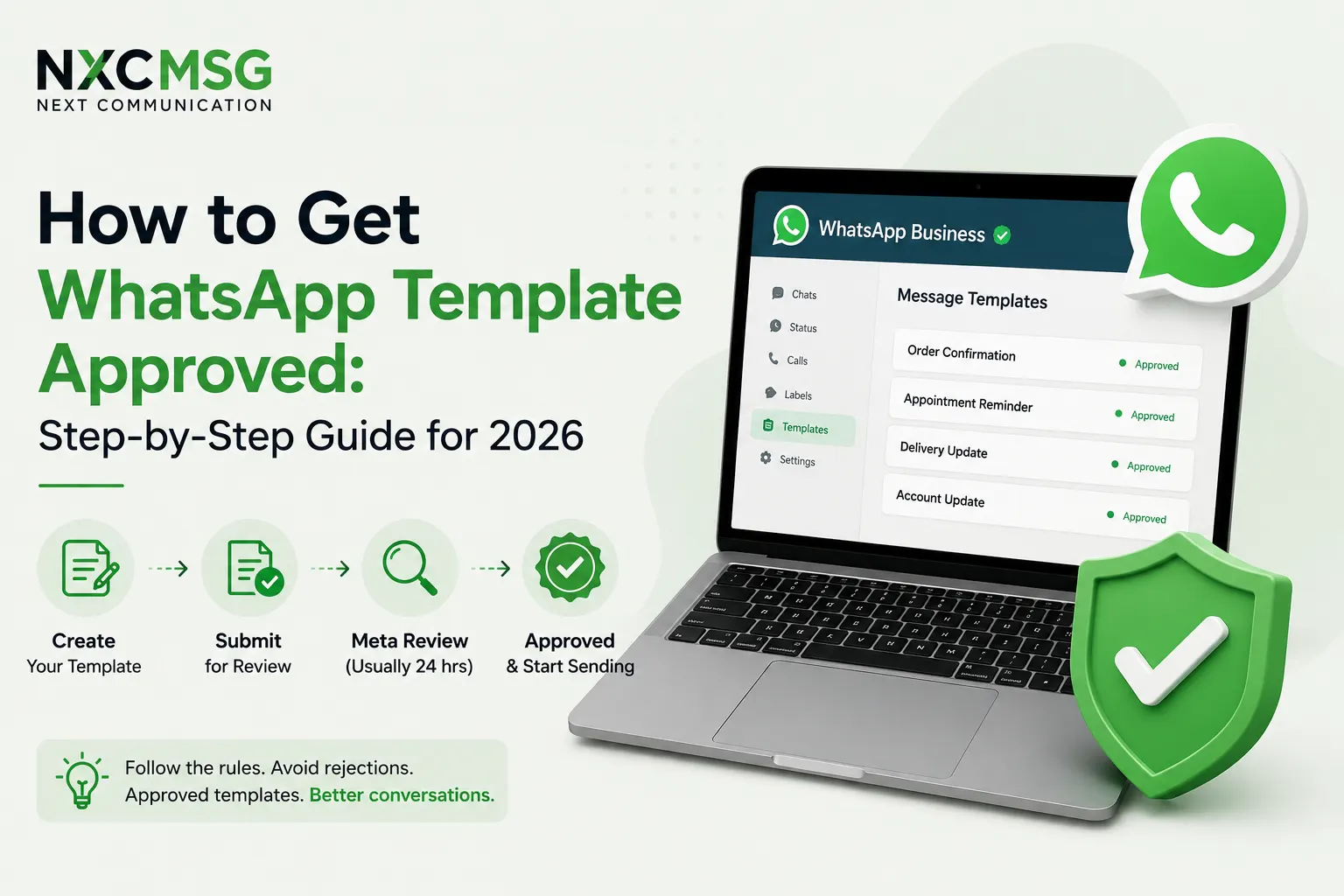
Set Up Your First Message Templates per Market Create
separate message templates for each language and market. Templates must be
approved by Meta before use. Name your templates clearly by language and use
case (e.g., 'order_confirmation_pt_br' for Brazilian Portuguese). Factor in
cultural nuance — a template that converts well in the UK may need
significant adaptation for India or the Middle East. |
|
5 |
Integrate With Your CRM and Global Tech Stack Connect your
WhatsApp Business API to your CRM (HubSpot, Salesforce, Zoho, etc.) to
centralise lead management, track conversation history across regions, route
leads to the correct regional team, and attribute WhatsApp conversations to
revenue. This integration is what transforms WhatsApp from a messaging tool
into a global sales and support engine. |
4. Multilingual Messaging — Reaching
Customers in Their Language
Why Language Localisation Is Non-Negotiable for Global Brands
The data is
unambiguous: 72% of consumers prefer to communicate with businesses in their
native language, and they are significantly more likely to make a purchase when
addressed in their mother tongue. For global brands, sending English-only
WhatsApp messages into markets like India, Brazil, the Middle East, or
Southeast Asia is not just a missed opportunity — it actively signals that your
brand does not understand or respect the local audience.
Language
localisation is not translation. It is the adaptation of your message content,
tone, idioms, cultural references, and even formatting to feel natural and
relevant to a specific cultural context. A direct translation of your English
campaign copy into Portuguese, Arabic, or Hindi will rarely perform as well as
content crafted specifically for that audience by someone who understands the
cultural context intimately.
How to Create Multilingual WhatsApp Message Templates
The WhatsApp
Business API supports over 60 languages for message templates, including
right-to-left scripts. For each market, create dedicated template sets covering
your core message types: welcome messages, lead qualification flows, order
confirmations, appointment reminders, re-engagement campaigns, and promotional
offers. Each template must be submitted for Meta approval individually — factor
this into your launch timeline, as approval can take 24 to 72 hours per
template.
Translation Best Practices — Avoid These Common Mistakes
•
Never use machine
translation alone — always have a native speaker review and adapt the output
•
Adapt idioms and cultural
references — literal translations often sound unnatural or confusing
•
Match the formality level
expected in each market — Brazilian Portuguese is informal; Japanese and Korean
business communication is highly formal
•
Localise dates, times,
currency, and number formats to the regional standard
•
Test translated messages
with native speakers before submitting for Meta approval
• Keep templates concise — verbosity in one language often becomes extremely long in another
Right-to-Left Language Support (Arabic, Hebrew, Urdu)
The WhatsApp interface automatically adjusts text direction for right-to-left languages including Arabic, Hebrew, and Urdu. When creating templates in these languages, ensure your BSP platform displays them correctly in RTL format for review. Content mixing RTL and LTR text (such as brand names in Latin script within an Arabic message) requires careful formatting to render correctly on all devices. Work with a native speaker who has experience formatting RTL digital content.
5. Market-by-Market WhatsApp Strategy
Global Market Quick Reference
|
Market |
WA Users |
Key
Opportunity |
Compliance
Note |
|
🇮🇳
India |
500 Million+ |
Largest
single market; e-commerce & fintech booming |
DPDP Act 2023 |
|
🇧🇷
Brazil |
147 Million+ |
Mobile-first;
highest daily usage globally |
LGPD Data Law |
|
🇸🇦
Middle East |
100 Million+ |
High income,
high purchase intent |
Regional
content sensitivity |
|
🇪🇺
Europe |
700 Million+ |
Mature
market; privacy-conscious consumers |
GDPR strict
compliance |
|
🌏
SE Asia |
200 Million+ |
Fastest-growing
WhatsApp region globally |
Varies by
country |
|
🌍
Africa |
400 Million+ |
Emerging
market; WhatsApp as primary internet |
Local BSP
recommended |
WhatsApp in India — The World's Largest WhatsApp Market
India is home
to over 500 million WhatsApp users — the single largest national market
globally. For brands entering or scaling in India, WhatsApp is not a secondary
channel; it is often the primary digital touchpoint with customers. The Indian
market responds exceptionally well to voice notes (a culturally preferred
communication format), regional language messaging across Hindi, Tamil, Telugu,
Bengali, and Marathi, and transactional messaging for e-commerce, fintech, and
edtech. India's Digital Personal Data Protection Act (DPDP) 2023 governs how
customer data is collected and processed — ensure compliance before launching.
WhatsApp in Brazil — High Engagement, Mobile-First Audience
Brazil has one
of the world's highest WhatsApp engagement rates. The app has effectively
replaced SMS and is used for everything from personal messaging to business
transactions and even government services. Brazilian consumers expect fast,
conversational, informal messaging from brands — stiff corporate language
performs poorly. E-commerce, fashion, beauty, and financial services brands
have seen exceptional results running Click-to-WhatsApp campaigns in Brazil.
Brazil's Lei Geral de Protecao de Dados (LGPD) is broadly comparable to GDPR
and requires explicit data consent.
WhatsApp in the Middle East — Premium Audience, High Purchase Intent
The UAE, Saudi
Arabia, Qatar, and Kuwait represent some of the world's highest per-capita
income markets, and WhatsApp penetration across these countries is extremely
high. Middle Eastern consumers are sophisticated WhatsApp users who engage
readily with business accounts — particularly in luxury retail, real estate,
automotive, and financial services. Message timing is critical: respect prayer
times and the Friday-Saturday weekend in Gulf markets. Arabic language messages
significantly outperform English in engagement, even for brands where the
target audience speaks fluent English.
WhatsApp in Europe — GDPR Compliance and Privacy-Conscious Users
Europe
represents a massive and commercially valuable WhatsApp market — particularly
in Germany, Italy, Spain, France, and the UK. European consumers are among the
world's most privacy-conscious, and GDPR compliance is non-negotiable. Every
contact in your European database must have provided explicit, documented
opt-in consent for WhatsApp marketing. European consumers respond well to
value-driven messaging, transparent data practices, and a non-intrusive
communication frequency. The reward for getting it right is a highly engaged,
high-value audience.
WhatsApp in Southeast Asia — Emerging Growth Markets
Southeast Asia is WhatsApp's fastest-growing region, with strong and accelerating adoption across Indonesia, Malaysia, the Philippines, Thailand, and Vietnam. These markets are characterised by young, mobile-native populations with high social media engagement and growing e-commerce adoption. Local language messaging is essential — Bahasa Indonesia, Filipino, and Thai all significantly outperform English for engagement in these markets. Partner with local WhatsApp BSPs who have established regional infrastructure for the most reliable delivery rates.
6. Global Compliance — GDPR, Data Privacy,
and WhatsApp Policy
GDPR and WhatsApp Marketing in Europe
The General
Data Protection Regulation (GDPR) applies to any business marketing to EU and
EEA residents, regardless of where your business is headquartered. For WhatsApp
marketing, GDPR requires: explicit, freely given, informed opt-in consent for
receiving WhatsApp messages; a clear and easy opt-out mechanism; documentation
of how and when consent was obtained; the right for individuals to access,
correct, or delete their data; and appropriate data processing agreements with
your BSP.
Data Localisation Requirements by Region
Several
countries require that data collected from their citizens be stored on servers
located within that country. India's DPDP Act 2023 includes data localisation
provisions. Russia, China, and several other markets have strict data
localisation requirements. Before launching in any new market, audit where your
BSP stores message data and whether that aligns with local data laws. This is a
technical requirement that must be addressed in your BSP selection process, not
an afterthought.
Building a Compliant Global Opt-In Strategy
The foundation
of a compliant global WhatsApp strategy is a robust opt-in system. Build opt-in
collection into every customer touchpoint: website sign-up forms (with explicit
WhatsApp consent checkbox), in-store QR codes, post-purchase flows, social media
lead forms, and offline event registration. Store consent records with
timestamps, the source of consent, and the specific messaging category
consented to. Review your opt-in processes with a qualified data protection
professional in each key market before launch.
WhatsApp's Global Business Policy — What Every Brand Must Know
Beyond regional data laws, WhatsApp's own Business Policy governs what you can and cannot send through the API globally. Prohibited content includes gambling promotions, adult content, alcohol advertising to minors, prescription drug promotions, and political content. Template messages must accurately represent their content category — marketing messages cannot be submitted as utility templates to bypass messaging restrictions. Policy violations can result in template rejection, messaging restrictions, or permanent account bans across all markets.
7. Localising Your WhatsApp Customer
Experience
Adapting Tone, Timing, and Content by Culture
Effective
global WhatsApp marketing goes far beyond language translation. Each market has
distinct cultural norms around communication style, formality, humour, and
directness that significantly affect how messages are received. Brazilian
audiences respond well to warm, friendly, informal messaging. German audiences
prefer direct, factual communication with minimal marketing language. Indian
audiences appreciate relationship-building and personalisation. Middle Eastern
audiences respond to respect, generosity of offer, and premium positioning.
Develop regional messaging guidelines for each key market and train your
content team accordingly.
Timing is
equally cultural. Sending a promotional message during Ramadan evening prayers
in the Middle East, during Diwali festival hours in India, or at 7am on a
Saturday in Germany will damage your brand's relationship with that audience.
Build market-aware send-time scheduling into your BSP configuration and respect
local holidays, cultural events, and business hour norms in every market.
Local Currency, Time Zones, and Regional Offers
Ensure every
customer-facing message uses the correct local currency format, regional
pricing, and locally relevant offers. Showing prices in USD to customers in
Brazil, India, or the UAE creates friction and signals a lack of local
commitment. Your CRM-WhatsApp integration should automatically populate
currency, pricing, and offer fields based on the customer's country, ensuring
every message feels locally crafted even when generated at scale.
Building Region-Specific Chatbot Flows
Generic chatbot flows that work adequately in one market often fail completely in another. Build region-specific chatbot conversation trees that account for local language nuance, market-specific products or services, regional pricing, local regulatory requirements (such as age verification for certain products), and culturally appropriate conversational style. Invest in separate chatbot QA testing with native speakers in each key market before going live.
8. Scaling WhatsApp Globally — Automation
and CRM Integration
Using the WhatsApp Business API at Enterprise Scale
Scaling
WhatsApp globally means operating multiple phone numbers across multiple
markets, managing thousands of simultaneous conversations, running automated
chatbot flows in multiple languages, and routing hot leads to the correct
regional sales or support team — all simultaneously and reliably. This requires
a mature API setup with high messaging tier limits per number, a BSP with
proven uptime and global delivery infrastructure, robust error handling and
message queuing for rate limit management, and a CRM that can handle
multi-region lead attribution and reporting.
Multi-Region CRM Integration and Lead Routing
Your CRM is the
central nervous system of your global WhatsApp operation. Configure your CRM to
capture the country of origin for every WhatsApp lead based on phone number or
self-reported data, route leads automatically to the correct regional team or agent,
tag and segment leads by market for region-specific follow-up sequences, track
the full conversation history regardless of which agent handled the
interaction, and attribute revenue to WhatsApp conversations by market for ROI
reporting.
Building a Global WhatsApp Support and Sales Team
At enterprise scale, a single team cannot manage WhatsApp conversations across multiple time zones and languages. Structure your global WhatsApp team around regional pods — teams of agents operating in the local language and time zone for each key market. Use your BSP's multi-agent inbox to route incoming conversations by country and language automatically. Implement clear escalation paths for complex enquiries, and build a knowledge base of approved responses in each language to ensure consistency and quality across all markets.
9. Measuring Global WhatsApp Performance
Key Metrics for International WhatsApp Campaigns
Measuring the
performance of a global WhatsApp operation requires both platform-level metrics
and business outcome metrics tracked separately for each market. The essential
metrics to track include message delivery rate and open rate by market, reply
rate and conversation initiation rate, lead qualification rate per region, cost
per lead and cost per acquisition by market, lead-to-customer conversion rate
by region, revenue attributed to WhatsApp by market, customer satisfaction
score for WhatsApp interactions, and average response time by regional team.
A/B Testing Across Markets
Global WhatsApp
campaigns require market-specific A/B testing — what works brilliantly in
Brazil may perform poorly in Germany, and vice versa. Test message copy
variations in each language independently, optimal send times by market,
different offer structures and call-to-action phrasings, chatbot conversation
flow variations, and template formats (text only vs. image + text). Run tests
with statistically significant sample sizes before rolling out winning
variations market-wide.
Building a Global Reporting Dashboard
Consolidate your global WhatsApp performance data into a single reporting dashboard that your leadership team can use to assess international performance at a glance. Most enterprise CRMs and BSP platforms offer API-based reporting that can feed into dashboards built in tools like Tableau, Looker, Google Data Studio, or Power BI. Structure your dashboard to show both global aggregate performance and market-by-market breakdowns, with the ability to drill into individual campaign or conversation-level data when needed.
Frequently Asked Questions (FAQ)
Optimised for featured snippet ranking and voice search targeting.
Q: Can I use WhatsApp
Business API in multiple countries?
A: Yes. The WhatsApp Business API supports global
operations. You can register multiple phone numbers under a single WhatsApp
Business Account — one per country or region — and manage all of them from a
centralised dashboard or CRM. This allows you to operate localised WhatsApp
presences across multiple markets from a single integrated platform.
Q: Does WhatsApp Business
API support multiple languages?
A: Yes. The WhatsApp Business API supports over 60
languages, including right-to-left scripts such as Arabic, Hebrew, and Urdu.
You can create separate message templates for each language and route users to
the appropriate language automatically based on their country code or stated
preference.
Q: Is WhatsApp Business
API GDPR compliant?
A: Meta provides tools and documentation to support GDPR
compliance, but legal compliance is ultimately the business's responsibility.
You must obtain explicit opt-in consent before messaging EU users, honour all
data subject rights requests, document your data processing activities, and
ensure your BSP has appropriate data processing agreements in place. Working
with a BSP that has built-in GDPR compliance features is strongly recommended.
Q: How do I expand my
brand internationally using WhatsApp?
A: Start by identifying which of your target markets have
high WhatsApp penetration. Set up a WhatsApp Business Account and register a
local phone number for each key region. Create localised, translated message
templates. Partner with a BSP that supports international operations. Integrate
with your CRM to manage leads and customers across regions from a single
platform. Then build market-specific chatbot flows, opt-in processes, and
content strategies for each region.
Q: What is the best BSP
for international WhatsApp Business API use?
A: The best BSP for global brands depends on your target
markets, budget, and tech stack. Leading BSPs with strong international support
include Twilio, Infobip, MessageBird, Vonage, Wati, and Interakt. Evaluate each
based on regional delivery performance, pricing model, CRM integrations,
compliance support, multi-language template management, and the quality of
their support team in your key markets.
Q: Do I need a separate
WhatsApp number for each country?
A: Not necessarily, but it is recommended for large-scale
operations. A single number can technically serve multiple markets, but
dedicated local numbers per region improve delivery rates, build local trust
with customers, and allow for market-specific messaging limits and quality
rating management. For enterprise-scale global operations, separate numbers per
market is best practice.
Q: How do I handle time
zones in a global WhatsApp strategy?
A: Use your BSP or CRM to schedule messages based on the recipient's local time zone. Best practice is to send messages during business hours in each recipient's region — typically 9am to 6pm local time. Many BSP platforms support time-zone-aware message scheduling at the individual contact level, eliminating the need to manually manage send times across markets.
Conclusion: Your Global Brand Starts With
One WhatsApp Message
The
infrastructure for global brand communication has fundamentally changed. In
2026, the businesses that win internationally are not necessarily the ones with
the biggest advertising budgets or the most sophisticated websites — they are
the ones that communicate with their international customers in the right
language, at the right time, through the right channel. And in over 180
countries, that channel is WhatsApp.
The WhatsApp
Business API gives your brand the tools to be genuinely local everywhere you
operate — multilingual, culturally aware, compliant with regional data laws,
and capable of delivering personalised conversations at a scale that would have
been impossible just a few years ago. Whether you are entering your first
international market or optimising a mature global operation, WhatsApp is the
communications backbone your strategy needs.
The world is already on WhatsApp. The only question is whether your brand is ready to meet them there.