Jul 23, 2026
Compare WhatsApp, Email, and SMS marketing performance in India for 2026. Discover open rates, engagement, ROI, costs, and which channel delivers the best results for businesses.
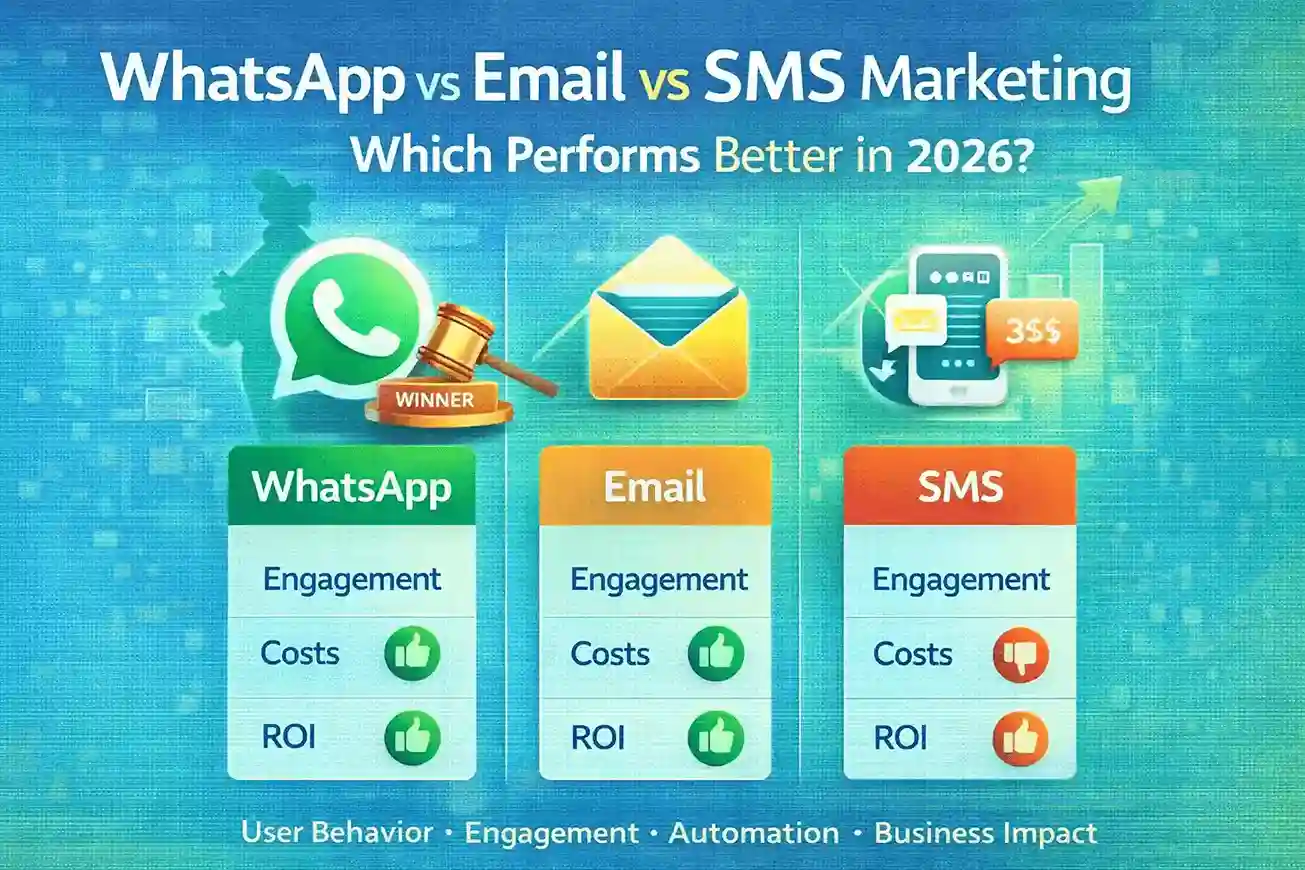
WABA WhatsApp vs Email vs SMSMarketing in India — Which Performs Better in 2026?
Marketing communications
have evolved rapidly. In India — one of the world’s largest smartphone markets
— businesses now rely on messaging channels like WhatsApp, email, and SMS to
engage customers. But which channel performs best in 2026?
This guide compares WhatsApp
vs Email vs SMS marketing across key performance indicators, cost
efficiency, engagement, and conversion potential — backed by real trends and
industry insights.
Channel Performance
Comparison (2026)
🟢
WhatsApp Marketing
Strengths
• High open rates
(90 %+)
• Real-time
engagement
• Supports rich
media (images, videos, buttons)
• Two-way
communication
• Automation via
WhatsApp Business API
Weaknesses
- Requires opt-in
- Costs per conversation
apply
- Template approvals required
Best for
- Order & delivery
notifications
- Abandoned cart recovery
- Conversational automation
- Support & sales
follow-ups
👉 WABA WhatsApp
API delivers the highest engagement and response rates among all channels in
2026.
🔵 Email
Marketing
Strengths
• Great for
long-form messaging
• Easy to segment
audiences
• Rich content
delivery
• Lower direct cost
Weaknesses
- Lower open rates (15–30 %)
- Longer response time
- Often buried in inboxes
Best for
- Newsletters
- Offers & promotions
- Content marketing
- Loyalty programs
👉 Email
drives brand storytelling but suffers from lower engagement compared to instant
messaging.
🔴 SMS
Marketing
Strengths
• Near-universal
device compatibility
• Fast delivery
• Simple, concise
messaging
Weaknesses
- Higher cost per message
than email
- Limited character support
- No rich media
- DND (Do Not Disturb)
restrictions in India
Best for
- OTP & transactional
alerts
- Short reminders
- Time-sensitive info
👉 SMS
is reliable for transactional alerts but limited in engagement and
interactivity.
|
Metric |
WhatsApp |
Email |
SMS |
|
Open Rate |
~90–98 % |
~20–30 % |
~90 % |
|
Response Time |
<2 mins |
Hours–Days |
Minutes |
|
Conversational |
Yes |
No |
No |
|
Media Support |
High |
High |
Low |
|
Automation |
Advanced |
Moderate |
Basic |
Summary:
• WhatsApp leads
in real-time engagement and interactivity.
• Email excels
in content depth and newsletters.
• SMS remains
reliable for urgent alerts
Cost
Comparison
|
Channel |
Typical Cost |
Notes |
|
WhatsApp API |
₹0.10–₹1.20 per conversation |
Depends on provider & template type |
|
Email |
Low to free |
Platform fees may apply |
|
SMS |
₹0.15–₹0.50 per SMS |
DND regulations & carrier costs |
Best Use Cases for Each
Channel
🟩
WhatsApp Marketing
- Abandoned cart recovery
- Appointment reminders
- Real-time order updates
- Lead qualification bots
- Conversational sales
funnels
🟦 Email
Marketing
- Content newsletters
- Monthly offers
- Loyalty program
communication
- Long-form product updates
🟥 SMS
Marketing
• OTP & login
verification
• Delivery alerts
• Critical reminders
• Short promotions
(limited text)
Multi-Channel Strategy(Best Practice)
The strongest strategy
often combines:
✔
WhatsApp for conversations & real-time automation
✔ Email
for content and long-form engagement
✔ SMS for
critical transactional alerts
Example:
A customer abandons a
cart → WhatsApp reminder → if no response, Email follow-up →
last expiry reminder via SMS.
This layered approach
maximizes conversions while minimizing costs.
FAQ Section (SEO Snippet
Ready)
Q: Does WhatsApp
marketing perform better than email?
Yes. WhatsApp messages have significantly higher open and response rates than
email in India.
Q: Is SMS still relevant
in 2026?
Yes — for transactional alerts (OTP, delivery notifications), but engagement is
limited compared to WhatsApp.
Q: Do WhatsApp API
campaigns cost more?
They can be more expensive per message than email, but they offer higher
conversions and engagement.
Conclusion
In 2026, WhatsApp
wins India’s marketing engagement battle due to:
- Instant response rates
- Conversational automation
- Rich media support
- Near-universal user
adoption
Email remains essential for content-rich campaigns, while SMS continues to serve urgent alerts. For Indian businesses, combining all three with WhatsApp as the core conversational channel delivers the best results.