
Jun 24, 2026
Discover how WhatsApp API for logistics enables real-time delivery tracking, automated shipment notifications, and improved customer communication.
The logistics and supply chain industry is undergoing a massive digital transformation. Customers today expect real-time delivery tracking, instant alerts, automated notifications, and seamless communication. Traditional SMS updates and email notifications are no longer enough.
This is where the WhatsApp Business API for Logistics becomes a game-changer.
With over 2 billion global users, WhatsApp has become the most trusted and widely used communication platform. Logistics companies, courier services, eCommerce brands, and supply chain businesses are now leveraging the official WhatsApp Business API to automate shipment updates, delivery notifications, OTP verification, and customer support — all within one platform.
In this comprehensive SEO-optimized guide, we’ll cover:
• What is WhatsApp API for logistics?
• How delivery tracking automation works
• Benefits for courier & supply chain companies
• Use cases and workflows
• SEO keywords & implementation strategy
• Why logistics businesses should adopt WhatsApp API in 2026
What is WhatsApp Business API for Logistics?
The WhatsApp Business API is Meta’s official enterprise messaging solution that allows medium and large businesses to send:
• Transactional messages
• Delivery tracking notifications
• Shipment status updates
• OTP verification messages
• Order confirmations
• Customer support replies
Unlike normal WhatsApp broadcast messages, the API provides:
• Verified business profile
• High message delivery rates
• Template-based approved notifications
• Automation via CRM or ERP integration
• Secure and encrypted communication
For logistics companies, this means automated real-time communication from warehouse dispatch to final delivery.
Why Logistics Companies Need WhatsApp Delivery Notifications
Customer expectations have changed dramatically.
Today’s buyers want:
• Instant tracking links
• Real-time shipment updates
• Delivery reschedule options
• Easy communication with delivery agents
• Proof of delivery confirmation
Traditional communication methods like SMS and email often have lower open rates. WhatsApp messages, however, have:
-
95%+ open rates
-
Higher engagement rates
-
Faster response times
-
Better customer trust
For courier companies, this translates into:
-
Fewer failed deliveries
-
Reduced customer support calls
-
Improved operational efficiency
-
Higher customer satisfaction
Features of WhatsApp API for Logistics
1. Real-Time Delivery Tracking Updates
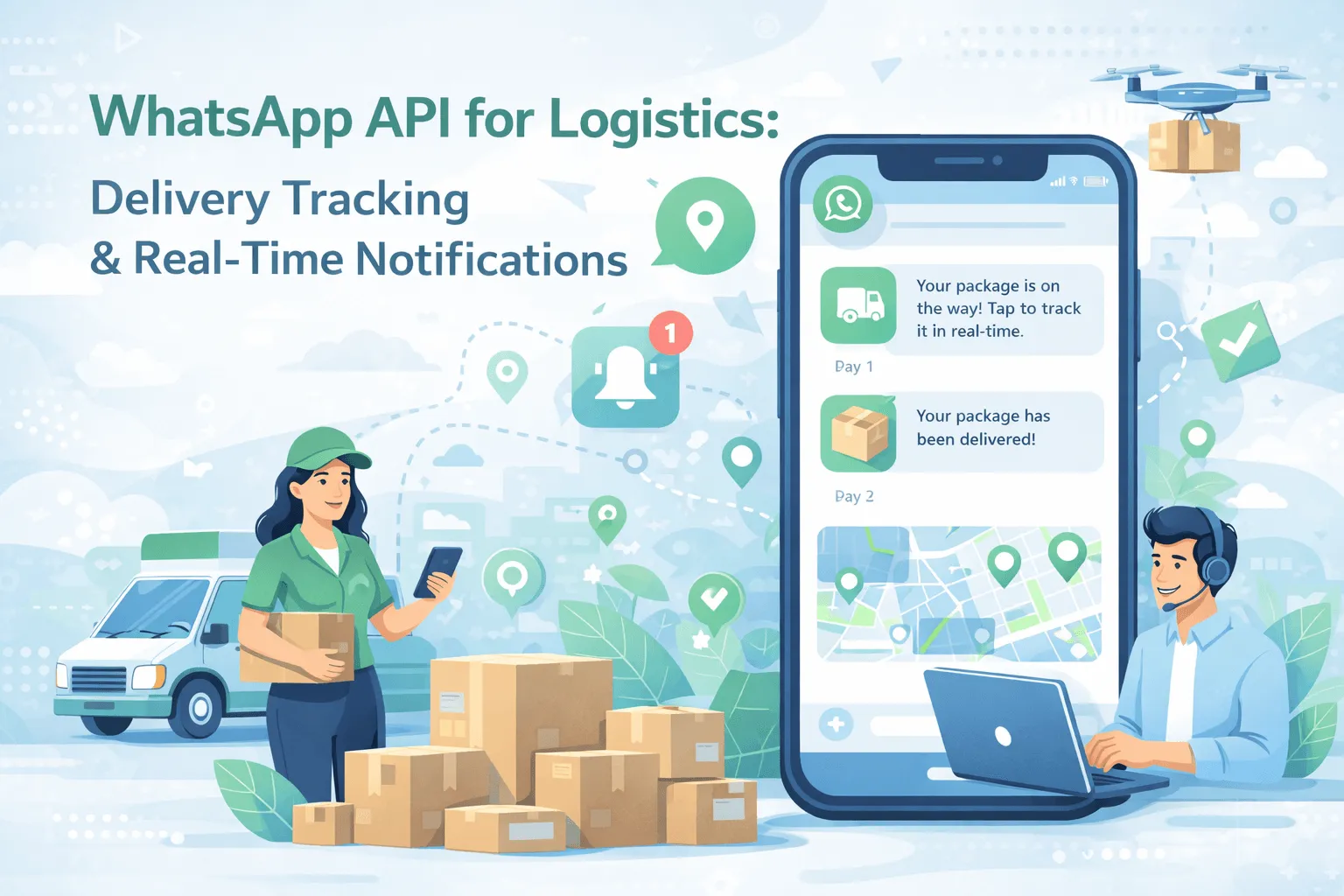
Send automated notifications such as:
-
Order dispatched
-
Out for delivery
-
Delivery delayed
-
Delivered successfully
-
Attempted delivery
Each notification can include:
-
Tracking ID
-
Live tracking link
-
Delivery agent contact
-
Estimated arrival time
This improves transparency and reduces “Where is my order?” queries.
2. Automated Shipment Alerts
Using CRM or logistics software integration, businesses can trigger WhatsApp notifications automatically when status changes occur.
For example:
-
When warehouse marks order as dispatched → WhatsApp message sent
-
When driver marks “Out for Delivery” → Customer notified instantly
-
When delivery completed → Proof of delivery sent
Automation ensures zero manual effort and consistent communication.
3. OTP & Secure Delivery Verification
For high-value shipments, WhatsApp API can send:
-
Delivery OTP
-
Secure PIN verification
-
Identity confirmation messages
This reduces fraud and ensures secure handover.
4. Interactive Buttons for Customer Actions
WhatsApp supports interactive buttons such as:
-
Track Order
-
Reschedule Delivery
-
Contact Support
-
Confirm Availability
Instead of calling support, customers can manage deliveries directly from chat.
5. Two-Way Customer Support
With WhatsApp Business API, logistics companies can:
-
Handle delivery queries
-
Solve shipment issues
-
Provide instant chat support
-
Reduce call center load
This enhances customer experience and improves retention.
Top Use Cases of WhatsApp API in Logistics
1. eCommerce Order Fulfillment
When a customer places an order:
• Order confirmation via WhatsApp
• Dispatch notification
• Tracking link
• Delivery confirmation
This builds trust and improves brand reputation.
2. Courier & Parcel Services
Courier companies can send:
• Pickup confirmation
• Shipment received update
• Transit updates
• Final delivery message
All automated through API integration.
3. 3PL (Third-Party Logistics) Companies
3PL companies can use WhatsApp API to:
• Share inventory alerts
• Update warehouse status
• Notify delays
• Send bulk shipment notifications
4. Last-Mile Delivery Communication
Drivers can:
• Notify customer before arrival
• Share live location
• Request availability confirmation
• Reduce failed delivery attempts
This increases successful first-attempt delivery rates.
Benefits of WhatsApp API for Logistics Businesses
✅ Higher Open Rates
WhatsApp messages have significantly higher open rates compared to SMS and email, ensuring customers receive important updates.
✅ Reduced Support Costs
Automated notifications reduce inbound customer queries such as:
-
“Where is my package?”
-
“When will my order arrive?”
-
“Can I reschedule delivery?”
✅ Improved Customer Experience
Real-time updates build trust and improve brand loyalty.
✅ Increased Operational Efficiency
Automation removes manual follow-ups and repetitive tasks.
✅ Lower Failed Deliveries
Pre-delivery notifications reduce missed deliveries and returns.
How WhatsApp Delivery Tracking Works (Step-by-Step)
-
Customer places an order.
-
Order is processed in ERP/CRM.
-
Logistics system updates shipment status.
-
API triggers WhatsApp template message.
-
Customer receives tracking notification instantly.
-
Customer interacts via buttons if needed.
-
Delivery completed → confirmation message sent.
This entire process is fully automated.
Future of Logistics Communication
• The future of logistics lies in:
• AI chatbots on WhatsApp
• Automated delivery workflows
• Predictive delivery alerts
• Integrated CRM + WhatsApp systems
• Conversational logistics management
Companies that adopt WhatsApp automation early will gain a competitive advantage.
Conclusion
The WhatsApp Business API for Logistics is not just a messaging tool — it is a powerful automation and customer engagement platform.
From real-time delivery tracking to automated shipment alerts and secure OTP verification, WhatsApp transforms the way logistics companies communicate with customers.
If you want to:
-
Reduce failed deliveries
-
Improve customer satisfaction
-
Automate shipment notifications
-
Increase operational efficiency
Then implementing WhatsApp API for logistics is a strategic move in 2026.