Jun 24, 2026
Explore the 2026 WhatsApp API AI chatbot policy updates. Learn what changed, new compliance rules, opt-in requirements, and how to avoid account suspension.
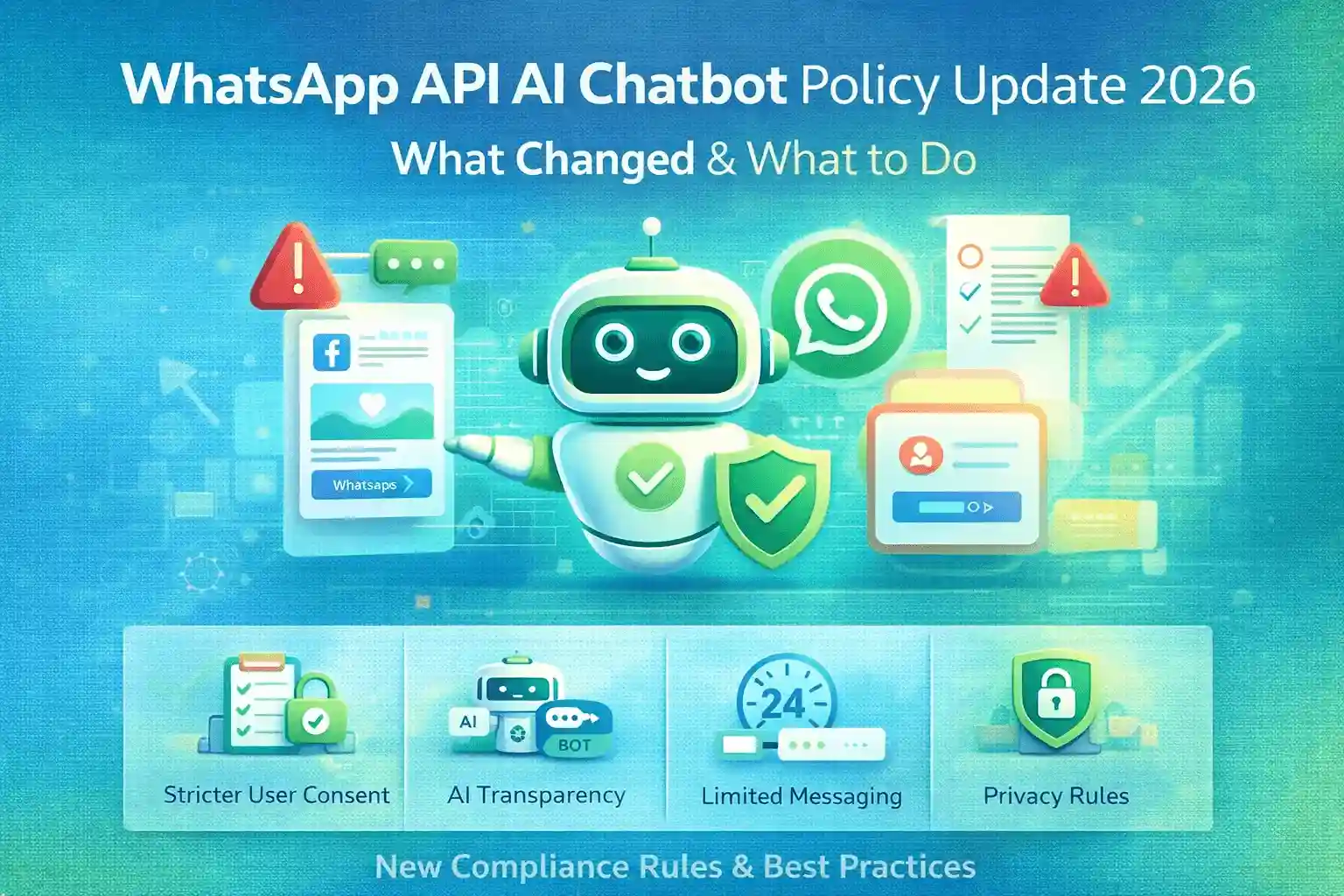
WhatsApp API AI Chatbot Policy Update 2026 — What Changed& What to Do
In 2026, Meta has introduced important updates to its WhatsApp
Business API chatbot policies to promote safer, privacy-focused, and
higher-quality conversational experiences. These changes affect how businesses
design, deploy, and automate AI-powered chatbots on the WhatsApp platform.
This guide explains the key policy changes, why they
matter, and how businesses should adapt to stay compliant while maximizing
engagement and conversions.
🧠 What Is the WhatsAppAPI AI Chatbot Policy?
WhatsApp AI Chatbot Policy governs how automated chatbots
can interact with users via the WhatsApp Business API. It ensures
communications remain user-centric, transparent, safe, and non-spammy,
while protecting user privacy and reducing abuse.
Chatbots must obey:
• Allowed use cases
• Opt-in requirements
• Data handling rules
• Response restrictions
• User privacy rights
Failing to comply can lead to:
• Template rejections
• Reduced delivery rates
• Account quality warnings
• Temporary or permanent suspension
🚨 What Changed in theWhatsApp API AI Chatbot Policy 2026
1️ Stricter User Consent & Opt-In Rules
New Requirement:
Before triggering AI chatbot responses, users must provide explicit consent
indicating they want automated messages.
Examples of valid opt-ins:
• “Send me updates via WhatsApp” checkboxes
• “I agree to WhatsApp AI messages” confirmation
• Click-to-WhatsApp Ads with clear acceptance
Why It Matters:
Consent protects users and improves message quality ratings, which affects
delivery and account health.
2️ Transparent AI Disclosures
Bots now must clearly disclose when a response is generated
by AI.
Example:
“Hi! I’m an automated assistant here to help. If you want
human support, type HELP.”
Purpose:
Users trust conversational bots when they know they’re chatting with
automation, not a person.
3️Limited Proactive Messaging
WhatsApp restricts the number of proactive AI messages
outside the 24-hour user-initiated window.
Allowed when:
• User explicitly requested updates
• Transactional notifications
• Critical alerts (safety, billing, service changes)
This prevents spam and enhances user trust.
4️ Safe Content & Ethical Guidelines
Chatbots must avoid:
• Disallowed categories (political persuasion, adult
content, hate speech)
• Medical/legal advice without disclaimers
• Misleading or deceptive phrasing
Bots must follow international content safety standards.
5️ Data Privacy & Usage Rules
AI bots must:
• Respect user privacy
• Avoid storing personal data beyond necessity
• Encrypt sensitive attributes
• Provide clear privacy disclosures
This aligns with global privacy laws like GDPR, CCPA,
and India’s Digital Personal Data Protection Act.
📊 What WhatsApp APIChatbot Features Are Allowed
✔ FAQs & automated support
✔ Order updates & delivery tracking
✔ Appointment scheduling
✔ Product recommendations
✔ Lead qualification flows
✔ Personalized reminders (opt-in only)
🚫 What’s Not Allowed
✖ Pushing unsolicited marketing
AI messages
✖ Auto-forwarding sensitive data
✖ Deep learning responses without transparency
✖ AI conversation without explicit consent
📈 How This Impacts Your
Business
Positive Effects
✔ Better message quality &
delivery
✔ Higher customer trust
✔ More conversions from trusted conversations
✔ Reduced spam reports
✔ Higher visibility in WhatsApp campaigns
Challenges
❌ More stringent consent tracking
❌
Extra design effort for AI transparency
❌
Compliance overhead for global brands
🧠 What You Should Do Next
✅ 1. Review Your Opt-In Process
Ensure explicit and clear user consent before triggering AI
chatbot flows.
✅ 2. Add AI Disclosure Messages
Use transparency disclaimers in your bot flows.
Example:
“This is an automated assistant. Human support available on
request.”
✅ 3. Audit Your Templates
Check that all proactive templates meet the new rules.
✅ 4. Implement Data Privacy
Notices
Make sure users know how their data is used and stored.
✅ 5. Use Quality Scoring Tools
Monitor WhatsApp quality ratingsand fix issues quickly.
Conclusion
The 2026 WhatsApp API AI chatbot policy update focuses
on user safety, consent, and transparency. While it introduces new
compliance steps, it also improves user trust and long-term engagement.
Businesses that adapt early will benefit from:
• Higher delivery and engagement rates
• Better customer experience
• Stronger brand reputation