Jun 24, 2026
Discover how leading brands use WhatsApp for HR and recruitment in 2026 — from candidate outreach and interview scheduling to onboarding automation at scale.
Somewhere right
now, a strong candidate is ignoring your recruiter's email. Not because they
are not interested in the role — but because the email arrived in an inbox they
check twice a day, sat beneath forty-seven other messages, and felt like one
more piece of corporate correspondence that could wait until tomorrow.
Tomorrow, they accepted an offer from a competitor who reached them via
WhatsApp within four minutes of their application.
This is the
talent acquisition reality of 2026. The candidate communication gap between
what HR teams are doing and what candidates actually respond to has never been
wider — or more commercially consequential. Email open rates for recruitment
messages sit at 21%. WhatsApp open rates for the same messages sit at 98%.
Candidate response rates to recruiter emails average 17%. Response rates to
WhatsApp messages from recruiters average 82%. The channel gap is not a minor
performance difference — it is the difference between filling a role in two
weeks and filling it in six.
This playbook covers everything HR and recruitment teams need to know about using WhatsApp for hiring in 2026 — from first outreach and AI-powered screening through to offer delivery, pre-boarding document collection, and the first-week onboarding sequences that set new hires up for success. Whether you run a corporate in-house team, a recruitment agency, or a high-volume frontline hiring operation, this guide gives you the strategy, the automation frameworks, the template examples, and the compliance guidance to build a WhatsApp recruitment engine that fills roles faster and keeps candidates engaged from the moment they hear about your opportunity to the end of their first month.
|
98% WhatsApp Message Open Rate vs 21% for
Email |
82% Candidate Response Rate via WhatsApp vs
17% Email |
60% Reduction in Time-to-Hire With WhatsApp
Recruitment |
|
73% Of Job Seekers Prefer Messaging Apps
Over Email |
50% Reduction in Interview No-Shows With
WhatsApp Reminders |
3x More Candidate Conversations With Same
Recruiter Team |
1. Why WhatsApp Is Transforming Talent
Acquisition in 2026
The Candidate Communication Crisis — What HR Teams Are Getting Wrong
The modern
candidate is not hard to find. LinkedIn, job boards, referral networks, and
talent pools give recruiters more access to potential hires than at any point
in history. The problem is not finding candidates — it is engaging them. Once a
candidate application is submitted or an outreach message is sent, the
communication experience that follows determines whether a strong hire
progresses through the process or disappears to a competitor who reached them
faster and more personally.
The majority of
HR teams are still running their candidate communication through email and
phone calls — channels designed for a different era of professional
communication. The average professional now receives 121 emails per day and
answers fewer than 50% of work calls from unrecognised numbers. Candidates —
particularly the most in-demand ones who have multiple opportunities available
— are not waiting patiently for a recruiter email to arrive. They are comparing
their experience across multiple active processes and progressing fastest with
the recruiters who reach them on the channels they actually use.
Why Email and Phone Are Losing the War for Candidate Attention
Email was
designed for asynchronous, formal communication — and it remains appropriate
for certain recruitment moments: formal offer letters, contracts, compliance
documentation, and communications that require a written record. But for the
high-frequency, time-sensitive communications that define a successful
recruitment process — interview confirmations, scheduling requests, quick
questions, status updates, and reminders — email is too slow, too formal, and
too easily ignored.
Phone calls
face a different problem: the majority of candidates, particularly younger
professionals and frontline workers, will not answer calls from numbers they do
not recognise. The voicemail that follows achieves a callback rate of under 10%
in most recruitment contexts. The combination of low answer rates and slow
callback cycles creates the extended response timelines that allow competitors
to move faster and secure the hire while your recruiter waits for a callback
that never comes.
The WhatsApp Advantage — Speed, Reach, and Engagement
WhatsApp occupies a unique position in professional communication: it is the channel where people already have personal, high-priority conversations — with family, friends, and trusted contacts. Messages arriving on WhatsApp are treated with a fundamentally different level of attention than messages arriving in an email inbox. They are seen quickly, they feel personal, and they invite an immediate response in a way that a formal email does not. For recruitment, where speed and personal connection are both commercially critical, this combination of properties makes WhatsApp the most powerful candidate communication channel available in 2026.
2. The Business Case for WhatsApp in HR
Time-to-Hire Reduction With WhatsApp
Time-to-hire is
the single most important operational metric in recruitment — directly
impacting the cost of vacancies, the quality of hires (the best candidates do
not stay available for long), and the productivity of hiring managers waiting
for a new team member. Every day a role sits vacant has a measurable cost —
ranging from £200 to £2,000+ per day depending on the seniority and function of
the position. Companies using WhatsApp across their recruitment funnel report
reductions in time-to-hire of up to 60% — not through cutting corners in the
assessment process, but through eliminating the response latency that accounts
for the majority of recruitment timelines in traditional processes.
Consider a
typical five-stage recruitment process where each stage involves a two-day
average wait for candidate response via email. That response latency alone adds
ten days to the process — before accounting for scheduling delays, no-shows,
and rescheduling. Replace email at each stage with WhatsApp and the same
process completes in two to three days of actual elapsed time, with automated
reminders handling the follow-up that previously consumed recruiter time.
Cost-per-Hire Impact of WhatsApp Recruitment
Recruitment
cost is not limited to the fees paid to job boards and agencies. The largest
hidden costs are the recruiter time spent on manual communication tasks —
scheduling, chasing responses, confirming details, resending documents — and
the cost of extended vacancy periods while these manual processes run their
slow course. WhatsApp automation eliminates the majority of these manual
communication tasks, allowing recruiters to handle three times the candidate
volume with the same headcount, or to reduce recruitment headcount while
maintaining hiring velocity. Both outcomes represent significant cost-per-hire
reductions that compound across high-volume hiring operations.
Candidate Experience as a Competitive Differentiator
Employer brand
is built through every interaction a candidate has with your organisation — and
the recruitment process is their first extended experience of how you operate.
A process where communication is fast, clear, and respectful of the candidate's
time signals a culture of responsiveness and professionalism. A process where
emails go unanswered for days, scheduling takes a week of back-and-forth, and
the candidate is left wondering where they stand signals the opposite. In
competitive talent markets, candidate experience is a direct retention variable
— candidates who had an exceptional recruitment experience start their roles
with higher engagement, lower early attrition, and greater advocacy for your
employer brand among their networks.
The Employer Brand Benefit of Conversational Hiring
WhatsApp recruitment creates a conversational hiring experience that feels fundamentally different from the transactional, form-filling processes that characterise most traditional recruitment. Candidates who are communicated with personally, promptly, and on their preferred channel report significantly higher satisfaction with the recruitment process — regardless of whether they receive an offer. This positive candidate experience generates employer brand advocacy: candidates who did not get the job but had a great experience tell their networks. In markets where your target candidates know each other — specific industries, professions, geographic areas — this word-of-mouth effect has measurable commercial value.
3. WhatsApp Across the Full Recruitment
Funnel
The full power of WhatsApp in recruitment is realised when it is deployed across every stage of the hiring funnel — not just used for a single communication type. Here is the complete funnel mapped with specific WhatsApp use cases and automation types at each stage.
|
🎯 Stage 1 |
Sourcing
and Attraction WhatsApp Use Case: Personalised outreach to passive candidates via WhatsApp
broadcast sequences, job alert delivery to opted-in talent pools, referral
programme messaging to existing employees Automation Type: Broadcast sequence with personalised merge fields — name,
role, company, relevant context Key Metric
Improved: Response
rate from passive candidate outreach — target 30%+ vs sub-10% for email |
|
📋 Stage 2 |
Application
and Screening WhatsApp Use Case: Automated screening questionnaire delivery via WhatsApp
chatbot, instant application acknowledgement with next steps, AI-powered
first-stage qualification — role fit, availability, salary expectations,
location Automation Type: Chatbot flow with branching logic — qualifies and scores
candidates automatically 24/7 Key Metric
Improved: Time-to-screen
— target under 24 hours vs 3–5 days for manual email screening |
|
📅 Stage 3 |
Interview
Scheduling and Confirmation WhatsApp Use Case: Automated interview slot selection via WhatsApp
conversation, calendar integration for real-time availability, instant
confirmation with full interview details, joining links, and interviewer
information Automation Type: Calendar API integration with automated slot presentation and
confirmation flow Key Metric
Improved: No-show rate
— target under 10% vs 20–30% for email-only confirmation |
|
🔍 Stage 4 |
Assessment
and Background Checks WhatsApp Use Case: Test and assessment link delivery via WhatsApp with
deadline reminders, background check form requests with document upload
prompts, reference request coordination Automation Type: Triggered message sequences with completion reminders at 24
hours and 48 hours Key Metric
Improved: Assessment
completion rate — target 85%+ vs 60–70% for email-delivered assessments |
|
🤝 Stage 5 |
Offer
and Acceptance WhatsApp Use Case: Offer letter delivery via secure WhatsApp message with
digital acceptance flow, salary negotiation communication via WhatsApp
conversation, offer deadline reminders, verbal acceptance capture Automation Type: Document message with acceptance confirmation flow — tracks
response and escalates to recruiter for verbal follow-up Key Metric
Improved: Offer
acceptance rate and time-to-acceptance — target under 48 hours |
|
🚀 Stage 6 |
Pre-Boarding
and Onboarding WhatsApp Use Case: Pre-boarding document collection — ID, bank details, tax
forms, right to work verification, Day One logistics and welcome message,
technology setup guidance, Week 1–4 drip onboarding sequence, pulse survey
check-ins at 2 weeks and 30 days Automation Type: Automated drip sequence triggered by offer acceptance date —
personalised to start date and role Key Metric
Improved: Day-1
readiness score and time-to-productivity — target 30% faster vs paper-based
onboarding |
4. WhatsApp Automation for High-Volume
Recruitment
Automated Screening Questionnaires via WhatsApp
For roles
receiving high application volumes, manual first-stage screening is the primary
bottleneck in recruitment velocity. A recruiter spending 10 minutes reviewing
and responding to each application across 200 applicants is investing 33 hours
— before a single interview has been conducted. WhatsApp screening automation
delivers a structured qualification questionnaire to every applicant
automatically — asking the five to eight questions that determine first-stage
fit — and routes qualified candidates forward while politely declining poor-fit
applicants, all without recruiter involvement.
The response rate advantage of WhatsApp over email for screening questionnaires is dramatic: WhatsApp screening questionnaires achieve 70 to 85% completion rates compared to 25 to 40% for equivalent email-delivered screening forms. More candidates complete the screening, more qualified candidates progress, and recruiters spend their time on conversations with pre-qualified prospects rather than chasing responses from candidates who have already mentally moved on.
AI Chatbots for First-Stage Candidate Qualification
AI-powered
WhatsApp chatbots take screening automation a step further — conducting
natural, conversational qualification interviews that adapt based on candidate
responses rather than following a rigid question list. An AI recruitment
chatbot can probe follow-up questions when a candidate's answer raises a
relevant point, handle clarification requests from candidates about the role or
company, and provide a candidate experience that feels personal and responsive
rather than robotic. The chatbot's conversation transcript is automatically
scored against your qualification criteria and appended to the candidate record
in your ATS — giving recruiters a rich context summary rather than a blank
application form.
Automated Interview Scheduling and Reminders
Interview
scheduling is one of the most time-consuming tasks in any recruitment process —
and one of the most completely automatable via WhatsApp. When a candidate
passes screening, an automated WhatsApp message presents available interview
slots (either as a list of options or as a link to a live calendar booking
system). The candidate selects their preferred slot directly in the WhatsApp
conversation. A confirmation message with full interview details, joining link,
interviewer name, and preparation guidance is sent immediately. Reminder
messages are sent automatically 24 hours and one hour before the interview —
reducing no-show rates by up to 50% compared to email-only confirmation.
Bulk Outreach to Passive Candidate Pools
For roles
requiring proactive sourcing from a talent pool — whether that is a database of
previous applicants, a referral network, or a segment of your employee alumni —
WhatsApp broadcast messaging enables personalised outreach to hundreds or
thousands of contacts simultaneously, each receiving a message that includes
their name, a reference to their background or previous interaction, and a
relevant opportunity. The response rates from this type of personalised
WhatsApp outreach to warm talent pools consistently exceed 30 to 45% — compared
to 8 to 12% for equivalent email campaigns to the same contacts.
Offer Letter Delivery and Digital Acceptance
The final stages of a recruitment process carry the highest drop-off risk — a delay between verbal offer and formal offer delivery is one of the most common reasons candidates accept counter-offers or pursue competing opportunities. WhatsApp offer delivery closes this gap: the offer letter PDF is sent directly in the WhatsApp conversation within minutes of verbal agreement, with a confirmation flow that captures digital acceptance and timestamps it automatically. For markets where digital signatures are legally recognised, the entire offer acceptance process can be completed within a single WhatsApp conversation — eliminating the days of email tag that characterise traditional offer administration.
5. WhatsApp for Different Recruitment
Contexts
WhatsApp recruitment strategy varies significantly by recruitment context — the approach that works for high-volume frontline hiring looks very different from executive search. Here is the right strategy for each context.
|
🏢 |
Corporate
In-House Recruitment Teams Corporate
in-house teams typically manage a mix of role types and seniority levels —
from entry-level through to senior management — with a focus on candidate
experience quality and employer brand consistency. WhatsApp is most valuable
for corporate in-house teams as an interview scheduling and communication
channel, reducing the administrative burden on recruiters and improving
candidate experience simultaneously. The key implementation consideration is
ATS integration — corporate in-house teams need WhatsApp conversations to
sync automatically with their ATS candidate records so that communication
history is visible to all hiring stakeholders. |
|
🏭 |
High-Volume
Frontline and Blue-Collar Hiring High-volume
frontline hiring — retail, logistics, manufacturing, hospitality, healthcare
support — represents the highest-impact use case for WhatsApp recruitment
automation. Frontline candidates are disproportionately WhatsApp-native,
often have limited email access or engagement, and respond to the speed and
informality of WhatsApp communication significantly better than to formal
recruitment processes. WhatsApp automation for frontline hiring handles the
entire candidate journey from initial outreach through to Day One briefing
with minimal recruiter involvement — allowing a small team to process
thousands of candidates per month. Interview no-show rates fall dramatically
with WhatsApp reminders. Offer acceptance speed increases significantly with
WhatsApp delivery. And onboarding completion rates improve when document
collection is handled via WhatsApp rather than email. |
|
🔍 |
Recruitment
Agencies and Staffing Firms Recruitment
agencies using WhatsApp for both candidate and client communication report 25
to 35% higher placement rates than agencies relying on email and phone alone.
For agencies, WhatsApp serves a dual purpose: candidate communication at
every stage of the placement process, and client update communication —
keeping hiring managers informed of shortlist progress, interview outcomes,
and offer status in real time. Multi-client WhatsApp management platforms
like Respond.io and Trengo allow agency recruiters to manage conversations
across multiple employer clients from a single unified inbox, with clear
labelling and routing to ensure candidate and client messages reach the right
consultant. |
|
👔 |
Executive
and Senior Leadership Search Executive
search requires a more considered WhatsApp approach — the informal,
conversational nature of the channel must be balanced with the gravitas
expected by senior candidates. WhatsApp is most effective at the scheduling
and logistics stage of executive search rather than the initial outreach
stage, where a personalised LinkedIn message or warm introduction typically
remains more appropriate. Once a senior candidate is in process, WhatsApp
scheduling, reminder, and update messages are welcomed for their speed and
convenience — senior candidates appreciate not having to manage another email
thread for logistical coordination. |
|
🎓 |
Campus
and Graduate Recruitment Graduate and
campus recruitment is one of the most natural fits for WhatsApp — the
candidate demographic is WhatsApp-native, highly engaged on messaging
platforms, and responds extremely well to fast, informal communication.
University career services increasingly accept WhatsApp as a primary employer
communication channel for on-campus recruitment events, assessment days, and
internship programmes. Graduate candidates who receive their interview
invitation and event reminders via WhatsApp report significantly higher
satisfaction with the recruitment process than those managed via email alone. |
|
📅 |
Seasonal
and Contractual Workforce Hiring Seasonal
hiring — retail holiday peaks, agricultural seasons, summer hospitality —
requires the ability to mobilise large volumes of candidates in very short
timeframes. WhatsApp automation handles the entire seasonal hiring funnel at
speed: bulk outreach to previous seasonal workers via broadcast, automated
screening for returning eligibility, rapid offer delivery with digital
acceptance, and pre-shift briefing messages as the season begins. Companies
managing seasonal workforces of hundreds or thousands of workers report that
WhatsApp automation reduces their seasonal recruitment cost-per-hire by 40 to
60% compared to traditional high-volume agency-led approaches. |
The period
between offer acceptance and the new hire's first day is one of the
highest-risk phases in the entire talent acquisition process — it is when new
hires are most vulnerable to counter-offers, cold feet, and competitor
approaches. A structured WhatsApp pre-boarding sequence maintains engagement,
manages administrative requirements, and builds excitement and readiness in a
way that a single welcome email cannot.
Pre-Boarding Document Collection via WhatsApp
Document collection is the most universally dreaded element of pre-boarding — for HR teams chasing incomplete submissions and for new hires navigating confusing email chains with multiple attachment requests. WhatsApp pre-boarding transforms this experience: a structured sequence guides the new hire through each document requirement individually, confirming receipt of each item before moving to the next, and sending automated reminders for any outstanding documents without requiring HR manual follow-up. What previously took three to seven days of email chasing is typically completed within 24 to 48 hours when managed via WhatsApp.
Day One Preparation Sequences
The evening
before a new hire's first day is a high-anxiety moment — questions about where
to arrive, what to bring, who to ask for, and what to expect flood in at a time
when HR is unavailable to answer them. A WhatsApp Day One preparation message
sent the afternoon before start date addresses every one of these questions
proactively: office address with map link, arrival time, who to ask for at
reception, dress code reminder, what to bring, and a warm personal welcome from
the hiring manager. New hires who receive this message arrive more confident,
more organised, and more positively disposed toward the organisation from the
very first moment.
First Week Check-Ins and Culture Integration
The first week
of a new hire's employment is the most information-dense, disorienting, and
emotionally significant week of their entire tenure. A daily WhatsApp check-in
during the first week — a brief, warm message checking how they are settling
in, providing a useful piece of information about the company or role, and
reminding them that HR is available if they need anything — provides a human
connection point that supports integration and identifies any early concerns
before they become attrition risks. The message takes seconds to receive and
seconds to respond to, but its impact on new hire sentiment is
disproportionately large.
New Hire Feedback Collection via WhatsApp Surveys
Pulse surveys sent via WhatsApp at two weeks, 30 days, and 60 days after start date achieve dramatically higher completion rates than equivalent email surveys — 70 to 85% completion versus 20 to 35% for email. These check-in surveys identify onboarding experience issues, role clarity concerns, team integration challenges, and management effectiveness signals at the earliest possible moment — when there is still time to intervene before a new hire becomes an early leaver. The data from these surveys, aggregated across cohorts of new hires, also provides a continuously updated onboarding quality score that HR leadership can use to drive process improvement.
7. WhatsApp for Internal HR Communication
Employee Announcements and Policy Updates
Internal HR
communication — policy updates, benefit changes, compliance training reminders,
company announcements — has traditionally relied on email, intranets, and
notice boards to reach employees. In organisations with high proportions of
frontline, non-desk, or shift-based workers, these channels fail
systematically: workers without company email access never receive the email,
workers without time to check the intranet miss the update, and notice boards
are ignored. WhatsApp internal communication reaches employees on the device
they always have with them, at a time and in a format they will actually engage
with.
Leave Requests and Approvals via WhatsApp
A
WhatsApp-integrated leave management flow allows employees to submit leave
requests via a structured WhatsApp conversation — specifying dates, leave type,
and covering arrangements — which routes automatically to their line manager
for approval and updates the HRIS system upon confirmation. Managers receive
the request as a WhatsApp message and can approve or decline with a single
reply. The employee receives instant confirmation. The entire process that
previously required an email chain, a form, and a manual HRIS update is
completed in a two-minute WhatsApp exchange.
Training and L&D Reminders via WhatsApp
Learning and
development completion rates improve significantly when reminders are delivered
via WhatsApp rather than email. Mandatory compliance training — data
protection, health and safety, equality and diversity — that employees
deprioritise when reminded by email is completed faster and at higher rates
when WhatsApp reminders are sent with direct links to the training platform,
completion deadlines, and manager escalation notifications for non-completion.
For organisations where compliance training completion is a regulatory
requirement, this improvement in completion rates has direct risk management
value.
Employee Wellbeing Check-Ins and Pulse Surveys
Employee wellbeing programmes delivered via WhatsApp — weekly check-in messages, mental health resource sharing, anonymous pulse surveys, and signposting to EAP services — reach employees in a more personal, immediate way than equivalent communications through formal HR channels. The conversational format of WhatsApp creates a lower-barrier environment for employees to acknowledge that they are struggling than a formal wellbeing email or a meeting with HR. For organisations committed to proactive wellbeing management, WhatsApp represents the most accessible and highest-engagement delivery channel available for routine wellbeing touchpoints.
8. Setting Up WhatsApp for HR — Technical
Requirements
WhatsApp Business App vs. API — Which Is Right for Your HR Team?
The WhatsApp
Business App is suitable for very small organisations or single-recruiter teams
managing low volumes of candidate communication — it provides basic messaging
capability with manual management and no automation. For any organisation
managing more than 20 to 30 active candidate conversations simultaneously, or
wanting to automate any part of the recruitment or onboarding process, the
WhatsApp Business API is essential. The API provides multi-agent team inbox
capability, full automation via chatbot flows and triggered messages, ATS and
HRIS integration, message template management, and the analytics visibility
needed to measure recruitment communication performance.
Integrating WhatsApp With Your ATS
The most
valuable technical integration for HR WhatsApp deployment is the connection
between WhatsApp and your Applicant Tracking System. This integration ensures
that every WhatsApp message sent to and received from a candidate is
automatically logged in their ATS candidate record — giving recruiters, hiring
managers, and HR leaders complete visibility of the communication history
without switching between tools. Native ATS integrations are available from
leading BSPs including Twilio, 360Dialog, and Infobip for major ATS platforms
including Greenhouse, Lever, Workable, SmartRecruiters, and iCIMS. Custom
integrations via Zapier or Make.com provide connectivity for ATS platforms
without native WhatsApp integration.
GDPR and Data Privacy Compliance for Candidate Data
GDPR compliance for WhatsApp recruitment requires explicit candidate consent before initiating WhatsApp contact — typically collected at the point of application via a clearly worded consent checkbox. Your privacy notice must explicitly reference WhatsApp as a communication channel used in the recruitment process and the data processing basis for using it. Candidate data shared via WhatsApp — CVs, documents, personal information — must be handled in line with your broader data retention and processing policies. Message logs must be maintained for auditability. Work with your Data Protection Officer and a GDPR-compliant BSP to ensure your WhatsApp recruitment setup meets all applicable requirements before going live.
Building Your HR WhatsApp Templates Library
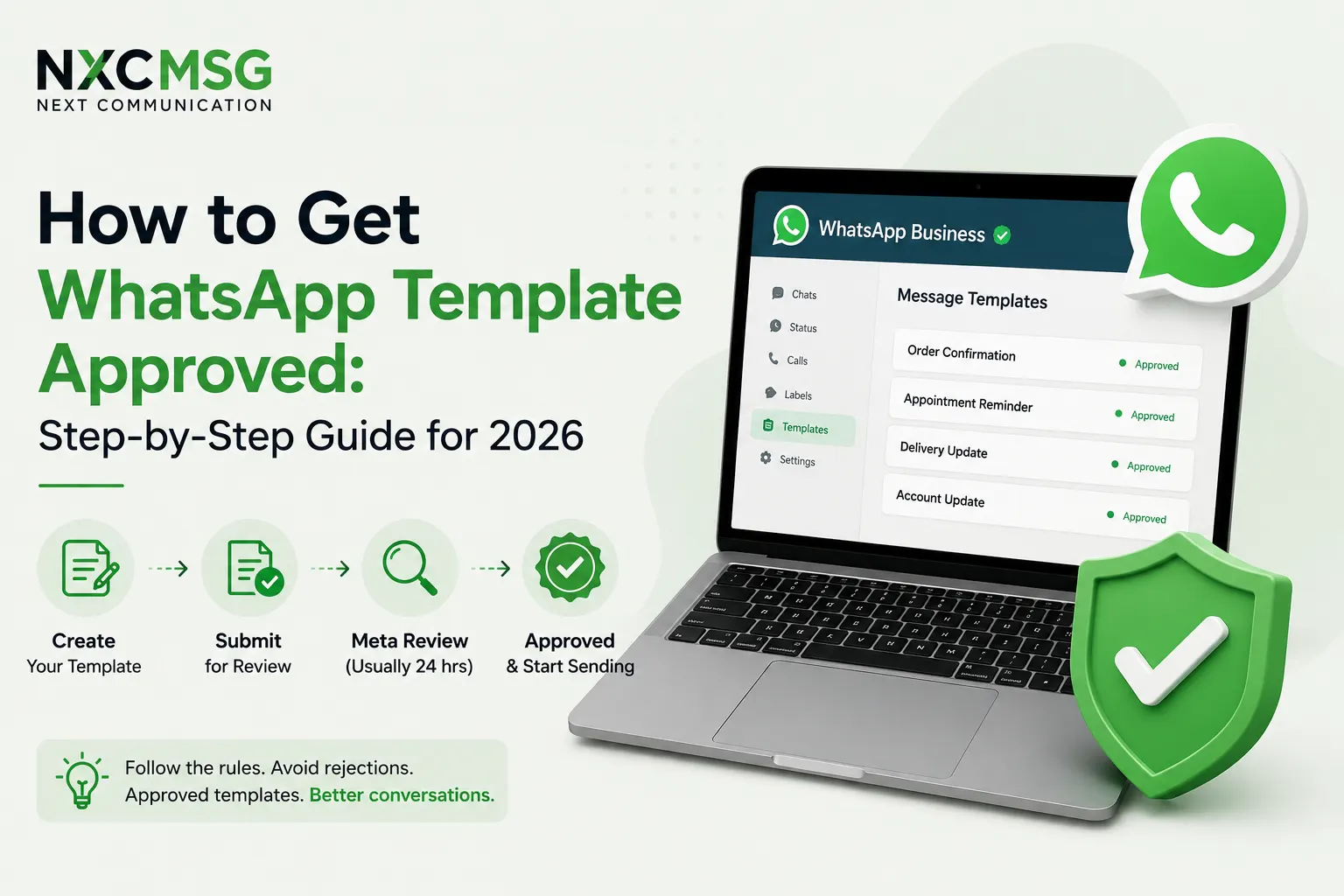
All business-initiated WhatsApp messages require pre-approved message templates submitted through your BSP. Build your core HR template library before going live — covering every stage of the recruitment and onboarding funnel. Essential templates include: initial outreach, application acknowledgement, screening questionnaire introduction, interview invitation, interview confirmation, interview reminder, offer delivery, pre-boarding document request, Day One preparation, week one check-in, and pulse survey invitation. Allow 1 to 3 business days for template approval and ensure all templates are reviewed by your legal and compliance teams before submission.
9. Recruitment Channel Performance
Comparison
|
Channel |
Open Rate |
Response Rate |
Avg Response
Time |
Best Stage |
|
Email |
21% |
17% |
24–48 hours |
Formal offers,
documentation, contracts |
|
Phone Call |
N/A |
38% answer
rate |
Immediate/VM |
Senior search,
urgent time-sensitive roles |
|
LinkedIn
InMail |
57% |
25% |
24–72 hours |
Passive
professional candidate sourcing |
|
SMS |
89% |
45% |
Under 90
minutes |
Reminders and
quick confirmations |
|
WhatsApp |
98% |
82% |
Under 5
minutes |
All stages —
full recruitment funnel |
10. Recruiter Productivity — WhatsApp vs
Traditional Channels
|
Recruiter
Task |
Email |
Phone |
WhatsApp (Automated) |
|
Screen 100
candidates |
8–12 hours |
15–25 hours |
1–2 hours
with chatbot automation |
|
Schedule 20
interviews |
3–5 hours |
4–8 hours |
Under 30
minutes with calendar integration |
|
Send offer
to 10 candidates |
1–2 hours |
2–3 hours |
Under 15
minutes with template flow |
|
Collect
pre-boarding documents |
3–7 days |
2–5 days |
24–48 hours
with document flow |
|
Onboard 50
new hires |
40+ hours |
N/A |
4–6 hours
with drip sequence |
11. Measuring WhatsApp Recruitment
Performance
Key Metrics for WhatsApp Recruitment Success
Measuring
WhatsApp recruitment performance requires tracking metrics at every stage of
the funnel — from outreach response rate through to new hire retention at 90
days. The essential metrics include: candidate outreach response rate (target
40%+ for warm pools, 25%+ for cold outreach), screening questionnaire
completion rate (target 75%+), interview confirmation rate (target 90%+),
no-show rate (target under 10%), offer-to-acceptance time (target under 48
hours), pre-boarding document completion rate (target 95% by Day One),
onboarding pulse survey completion rate (target 70%+), and 90-day new hire
retention rate broken down by recruitment source.
Benchmarks — What Good WhatsApp Recruitment Looks Like
Industry
benchmarks for WhatsApp recruitment performance are still maturing as adoption
increases, but organisations with well-implemented WhatsApp recruitment
programmes consistently report: candidate response rates of 60 to 82% (vs 17%
for email), interview no-show rates under 10% (vs 20 to 30% without WhatsApp
reminders), offer acceptance rates above 85%, pre-boarding document collection
completion within 48 hours for 90%+ of new hires, and overall time-to-hire
reductions of 40 to 60% compared to email-led processes. Use these benchmarks
as directional targets and measure your own performance trends week-over-week
as your WhatsApp recruitment programme matures.
Building a WhatsApp Recruitment Reporting Dashboard
Build a weekly recruitment performance dashboard that tracks all WhatsApp metrics by role type, recruiter, and hiring stage. Include response rate trends, stage-by-stage conversion rates, time-at-stage averages, and a comparison to your pre-WhatsApp baseline for each metric. Review this dashboard in weekly recruitment team meetings and use the data to identify where candidates are dropping off, which automations are underperforming, and which message templates need refreshing. The WhatsApp recruitment data advantage over traditional channels is significant — every interaction is trackable, every response is timestamped, and every conversion is attributable to a specific message and flow.
Frequently Asked Questions (FAQ)
Optimised for
featured snippet ranking targeting HR professionals and recruitment leaders.
Q: Can WhatsApp be used
for recruitment and HR communication?
A: Yes. WhatsApp is increasingly used by HR teams and
recruitment agencies for the full candidate journey — from initial outreach and
automated screening through to interview scheduling, offer delivery,
pre-boarding document collection, and new hire onboarding sequences. The
WhatsApp Business API enables full automation of these workflows, integrating
with ATS platforms and HRIS systems to trigger messages at each recruitment
stage. Companies using WhatsApp for recruitment report up to 60% reduction in time-to-hire
and 82% candidate response rates compared to 17% for email.
Q: Is WhatsApp GDPR
compliant for HR and recruitment?
A: WhatsApp can be used in GDPR-compliant recruitment
when implemented correctly. Key requirements include obtaining explicit
candidate consent before initiating WhatsApp contact, referencing WhatsApp in
your candidate privacy notice, using WhatsApp Business API (not personal
WhatsApp) to maintain message logs and auditability, ensuring candidate data is
processed and retained in line with your data policies, and working with a
GDPR-compliant BSP that processes data within the EEA or under appropriate transfer
mechanisms. Consult your Data Protection Officer before deploying WhatsApp for
candidate communication in EU markets.
Q: How do I integrate
WhatsApp with my ATS for recruitment?
A: WhatsApp ATS integration is achieved through one of
three approaches: using an ATS with a native WhatsApp Business API integration
(such as Greenhouse, Lever, or Workable connected via a BSP), connecting your
ATS to a WhatsApp platform via API webhooks that fire messages when candidate
status changes, or using automation platforms like Zapier or Make.com to build
custom ATS-to-WhatsApp workflows. The most seamless integrations are native —
where WhatsApp conversation history syncs automatically to the candidate record
in the ATS so all stakeholders have complete communication visibility.
Q: What WhatsApp message
templates are needed for recruitment?
A: Essential WhatsApp recruitment templates include:
initial candidate outreach with role details, application acknowledgement with
next steps, screening questionnaire introduction, interview invitation,
interview confirmation with full details and joining link, interview reminder
at 24 hours and 1 hour before, offer letter delivery with acceptance request,
pre-boarding document request, Day One logistics and welcome message, Week One
check-in, and pulse survey invitation at two weeks and 30 days. All business-initiated
WhatsApp messages require pre-approved templates — submit through your BSP and
allow 1 to 3 business days for approval.
Q: What is the best
WhatsApp tool for high-volume recruitment?
A: For high-volume frontline hiring, platforms with
WhatsApp-led hiring workflows — including Talkpush, Fountain, and Harver with
WhatsApp integration — handle scale and automation most effectively. For
corporate in-house teams, WhatsApp Business API connected to an ATS via a BSP
such as Twilio, Wati, or 360Dialog provides the right balance. Recruitment
agencies typically benefit from multi-client platforms like Respond.io or
Trengo, which manage candidate and client conversations across multiple employers
from a single unified inbox with clear routing and labelling per client.
Q: How do you use
WhatsApp for interview scheduling?
A: WhatsApp interview scheduling works through an
automated flow triggered when a candidate passes screening. A WhatsApp message
presents available slots or a calendar booking link. The candidate selects
their preferred time directly in the conversation. A confirmation with full
interview details, joining link, and interviewer information is sent
automatically. Reminder messages are sent 24 hours and 1 hour before the
interview. This process — which takes recruiters hours via email — completes in
minutes and reduces interview no-show rates by up to 50% compared to email-only
confirmation.
Q: Can WhatsApp be used
for employee onboarding?
A: Yes. WhatsApp onboarding sequences are used by HR teams to prepare new hires and support integration through their first weeks. Common flows include pre-boarding document collection via WhatsApp document request messages, Day One logistics sent the evening before start, technology setup guidance, week-by-week culture and role orientation content as a drip sequence, manager introduction messages, and pulse survey check-ins at two weeks, 30 days, and 60 days. Pre-boarding document collection completion typically accelerates from 3 to 7 days (email) to 24 to 48 hours (WhatsApp) — giving HR teams complete new hire readiness before Day One.
Conclusion: The Future of Hiring Is
Conversational — and It Is Already Here
The talent
acquisition teams that are winning in 2026 are not necessarily the ones with
the biggest recruitment budgets or the most sophisticated employer brand
campaigns. They are the ones who have built a hiring process that meets
candidates where they are — on WhatsApp, with speed, personalisation, and
genuine respect for the candidate's time and attention.
The data is
unambiguous. Eighty-two percent response rates versus seventeen percent. Sixty
percent faster time-to-hire. Fifty percent fewer no-shows. Thirty percent
faster time-to-productivity for new hires. These are not incremental
improvements — they are transformative gains that compound across every role,
every hiring season, and every new hire cohort. For organisations competing for
talent in tight markets, the WhatsApp recruitment advantage is not a
nice-to-have. It is a strategic imperative.
Start where the
impact is clearest for your organisation — whether that is interview scheduling
automation, high-volume screening, or pre-boarding document collection. Build
the capability, measure the results, and expand systematically. The
organisations that invest in WhatsApp recruitment infrastructure now are
building the hiring systems that will define their talent acquisition advantage
for the next five years.