Feb 23, 2026
Learn how WhatsApp Business API helps eCommerce brands automate order updates and recover abandoned carts to boost sales in 2026.
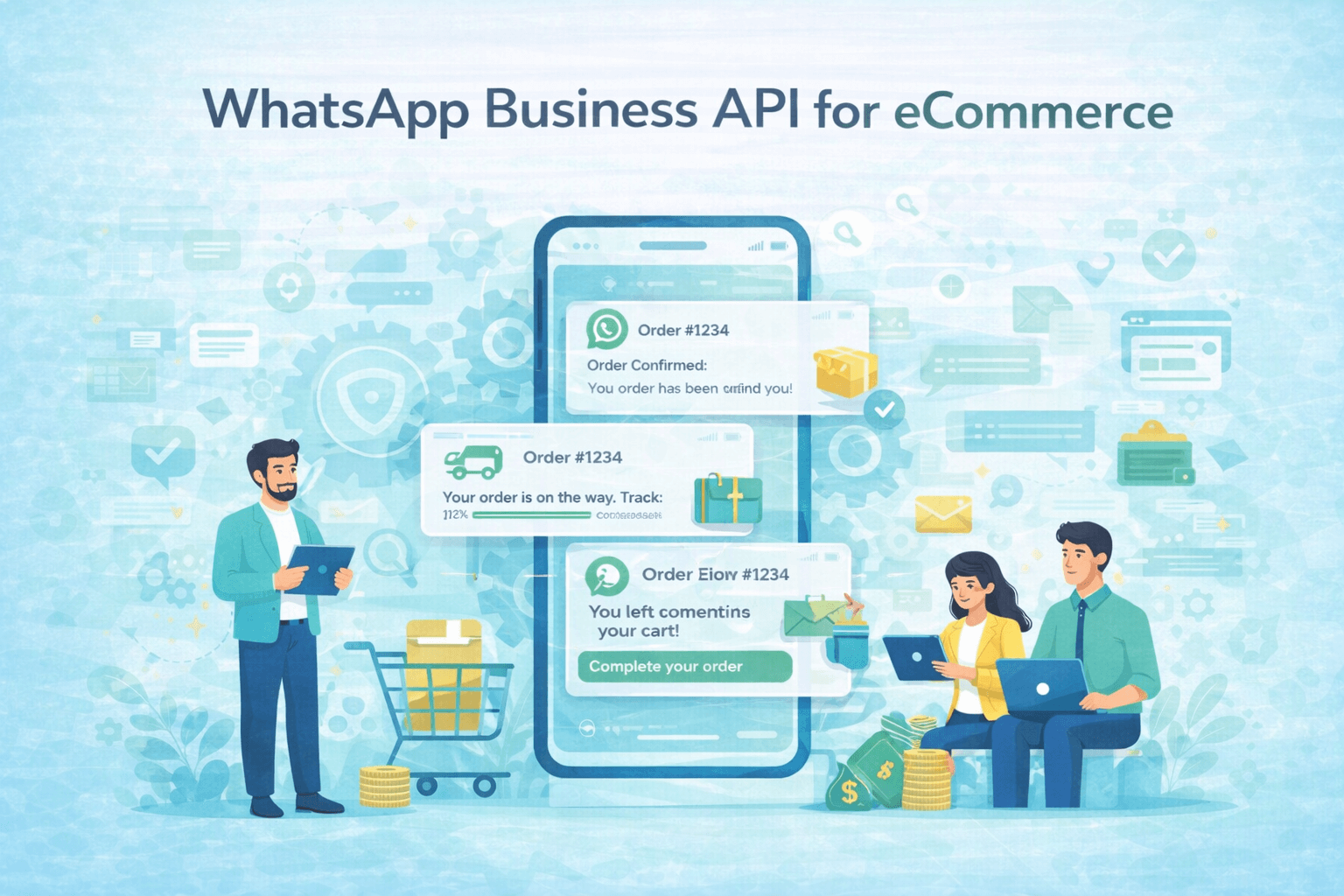
WhatsApp Business API for eCommerce: Order Updates &
Abandoned Cart Recovery (2026 Guide)
Introduction
In 2026, eCommerce brands are moving beyond emails and SMS
to WhatsApp Business API for real-time customer communication.
With open rates above 90%, WhatsApp has become the most effective
channel for order updates, payment reminders, and abandoned cart
recovery.
WhatsApp Business API enables automated, scalable, and
compliant messaging that directly impacts conversions and customer
satisfaction.
Why WhatsApp Business API Is Ideal for eCommerce
WhatsApp API is designed for medium to large
businesses that need automation, CRM integration, and high-volume
messaging.
Key reasons eCommerce brands prefer WhatsApp API:
• Higher open & response rates than email/SMS
• Instant delivery of transactional messages
• Two-way communication with customers
• Seamless integration with Shopify, WooCommerce, Magento,
CRM, and ERP
• Official Meta-approved platform (no ban risk)
Order Updates Using WhatsApp Business API
Types of Order Notifications You Can Automate
With WhatsApp API, eCommerce businesses can automatically
send:
• ✅ Order confirmation
• 📦 Shipping & tracking
updates
• 🚚 Out-for-delivery alerts
• 📬 Delivery confirmation
• 🔁 Return & refund
status updates
• 💳 Payment success or failure notifications
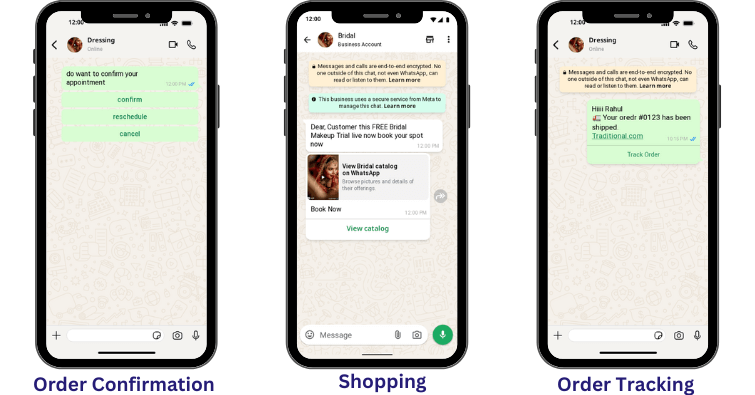
These messages are sent using pre-approved utility
templates, ensuring compliance with Meta policies.
Benefits of WhatsApp Order Updates
• Reduces “Where is my order?” support tickets
• Builds trust with real-time transparency
• Improves post-purchase experience
• Increases repeat purchases
Abandoned Cart Recovery with WhatsApp API
Why WhatsApp Works Better Than Email for Cart Recovery
• WhatsApp messages are read within minutes
• Customers can reply instantly
• Supports images, product links & buttons
• Personalised reminders feel less intrusive
How WhatsApp Abandoned Cart Automation Works
1. Customer adds product to cart
2. Leaves without completing checkout
3. WhatsApp API triggers an automated reminder
4. Message includes:
• Product image
• Price
• Checkout link
• CTA button (Complete Purchase)
Best Practices for Cart Recovery Messages
• Send first reminder within 30–60 minutes
• Follow up after 24 hours
• Use urgency (“Limited stock”, “Offer expiring”)
• Keep tone helpful, not spammy
WhatsApp API Features That Boost eCommerce Sales
• Interactive Buttons – Buy now, Track
order, Pay now
• WhatsApp Flows – In-chat checkout,
address collection
• Automation & Chatbots – 24/7
responses
• CRM Integration – Customer history &
segmentation
• Click-to-WhatsApp Ads – Convert ads
directly into chats
Compliance & Customer Consent
WhatsApp Business API follows strict Meta guidelines:
• Users must opt-in
• Templates require approval
• Promotional messages follow conversation rules
• High-quality messaging improves delivery & cost
This ensures brand safety and long-term scalability.
Who Should Use WhatsApp Business API for eCommerce?
Ideal for:
• D2C brands
• Online marketplaces
• Fashion & retail stores
• Electronics & appliance sellers
• Subscription-based businesses
If you handle daily orders and customer queries,
WhatsApp API is no longer optional in 2026.
Conclusion
WhatsApp Business API is transforming eCommerce
communication by making order updates instant and abandoned
cart recovery highly effective. Businesses using WhatsApp API consistently
see:
• Higher conversion rates
• Lower cart abandonment
• Better customer satisfaction
• Reduced support costs
For eCommerce brands aiming to scale in 2026, WhatsApp API is a revenue-driving communication channel, not just a messaging tool.