Jun 24, 2026
Explore the future of conversational AI on WhatsApp — emerging trends, AI chatbot evolution, automation opportunities, and how businesses can benefit in.
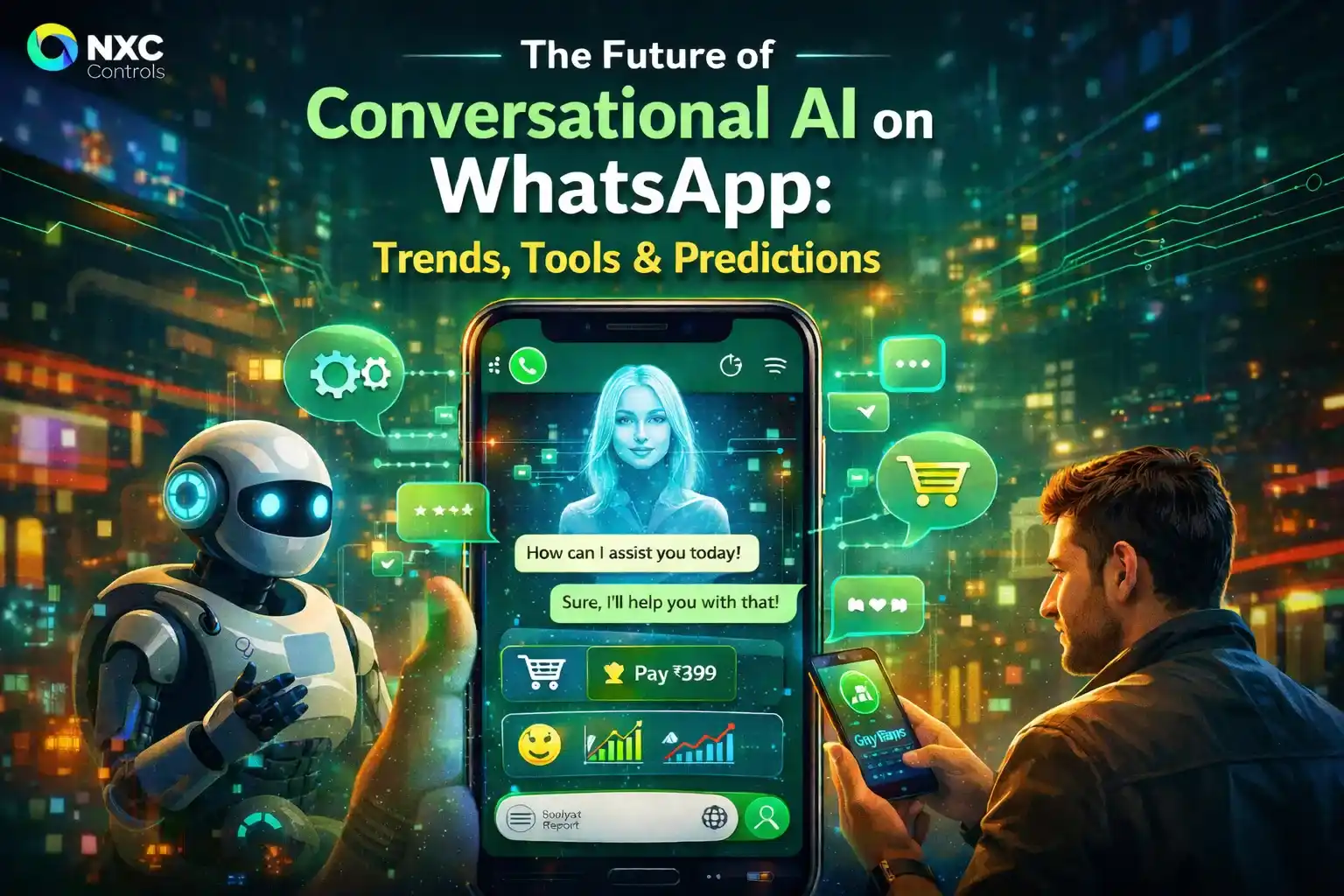
Conversational AI is transforming the way brands interact
with customers — and WhatsApp is leading this revolution. With more than 2
billion active users worldwide, WhatsApp has become not just a
messaging platform but a conversational commerce engine. The
integration of advanced AI chatbots, predictive analytics, and
automation workflows through the WhatsApp Business API is setting the
stage for the future of customer engagement.
In 2026, businesses aren’t just sending scripted replies —
they’re enabling intelligent, personalized conversation that feels human.
What Is Conversational AI on WhatsApp?
Conversational AI refers to technologies that allow
computers to simulate real-world human conversation through text or voice. On
WhatsApp, this is achieved using AI-driven chatbots, natural language
processing (NLP), and automated scripts powered by the WhatsApp Business API
combined with AI engines.
Examples include:
- Smart
FAQs
- Lead
qualification bots
- Intent
detection
- Personal
recommendation engines
- Autonomous
workflow triggers
Why Conversational AI is the Future on WhatsApp
Customers expect answers immediately — conversational AI
enables real-time responses without staff fatigue.
2️ Scalability
AI handles thousands of conversations simultaneously, far
beyond human capability.
3️ Higher Engagement
AI can personalize messages based on user behavior, purchase
history, preferences, and more.
4️ Cost Efficiency
Automates repetitive support tasks and reduces human
resource expenses.
5️ Rich Media Interactions
AI chatbots can send images, buttons, catalogs, quick
replies, and even in-app payments.
WhatsApp Business API + AI: What’s Possible
The combination of WhatsApp Business API with Conversational
AI unlocks:
🔹 Smart Lead
Qualification
AI can ask qualifying questions and segment leads
automatically.
Example:
“What is your budget range for this product?”
“Which city are you in?”
🔹 Personalized Product
Recommendations
AI can suggest items from a product catalog based on
preferences.
Instead of generic text updates, AI can answer:
“Where is my order?”
🔹 Voice-Enabled AI
Assistance
Users can interact with voice commands inside WhatsApp for
hands-free support.
🔹 Predictive Customer
Insights
AI anticipates needs based on trends and past behavior.
Real-World Use
✔ eCommerce Brands
• AI product discovery
• Automated sales funnels
• Upsell and cross-sell suggestions
✔ Travel & Hospitality
• Trip planning bots
• Personalized itineraries
• Real-time updates
✔ Financial Services
• Secure balance queries
• Fraud alerts
• Personalized offers
✔ Healthcare
• Appointment scheduling
• Symptom triage
• Prescription reminders
✔ Education
• Course recommendations
• Admission guidance
• Exam reminders
AI Chatbot Evolution on WhatsApp
Stage 1: Scripted Automation
Basic replies and fixed workflows.
Stage 2: Rule-Based Chatbots
Conditional flows with limited intelligence.
Stage 3: NLP Chatbots
Understands natural language, answers variably phrased
questions.
Stage 4: Generative AI Assistants
Full conversational context, personalized responses, and
memory retention.
By 2026, many businesses will transition from Stage 2 to
Stage 3 and beyond.
Benefits for Businesses
🎯 Higher Conversions
AI engages customers proactively and reduces drop-off
points.
Natural, quick, and personalized messaging builds trust.
📊 Actionable Analytics
AI tracks sentiment, intent, and engagement rates.
Automated support no longer needs night shifts.
⚙ Reduced Operational Costs
Fewer support agents needed for repetitive inquiries.
🔹 Privacy &
Compliance
AI must respect data protection standards like GDPR and
India’s data laws.
🔹 Quality Control
AI responses must align with brand tone and accuracy.
🔹 Ethical AI
Avoid bias, misinformation, and unpredictable outputs.
🔹 Integration Complexity
Proper API + AI integration requires skilled developers.
How Businesses Can Prepare for the Future
• Choose an Official BSP:
Ensure Meta-approved WhatsApp API access.
Use business data to fine-tune conversational responses.\
• Segment Audiences:
Personalize messaging based on behavior and preferences.
• Monitor & Improve:
Use logs and analytics for continuous improvement.
• Hybrid Support:
Combine AI with human escalation for complex issues.
FAQ Section
Q1: What is conversational AI on WhatsApp?
AI that enables automated, intelligent responses and workflows through WhatsApp
Business API.
Q2: How does AI improve customer support on WhatsApp?
By providing instant replies, 24/7 availability, and personalized interactions.
Q3: Can WhatsApp AI chatbots handle sales?
Yes — they can qualify leads, recommend products, and guide customers to
purchase.
Future Trends
🤖 Integrated AI
Assistants
Chatbots that understand context and offer predictive
suggestions.
📈 Data-Driven
Personalization
AI tailors messages based on buying patterns and
preferences.
💼 Omnichannel Automation
Unified messaging across WhatsApp, Instagram, Messenger, and
email.
🚀 Voice-First
Conversational AI
Users will speak to AI inside WhatsApp like a virtual
assistant.
📊 Sentiment-Based Routing
AI will detect unhappy customers and escalate to human
agents automatically.
Conclusion
The future of conversational AI on WhatsApp is poised to redefine customer engagement. From basic automated replies to intelligent, data-driven conversations, businesses that invest in AI-powered messaging will:
• Reduce support costs
• Increase conversions
• Improve customer satisfaction
• Deliver real-time personalization